The Problem
I need to carry stuff when I ride my mountain bike. I want the stuff I am carrying to be secure, accesible, and not interfere with motion. Existing products don't do this well.
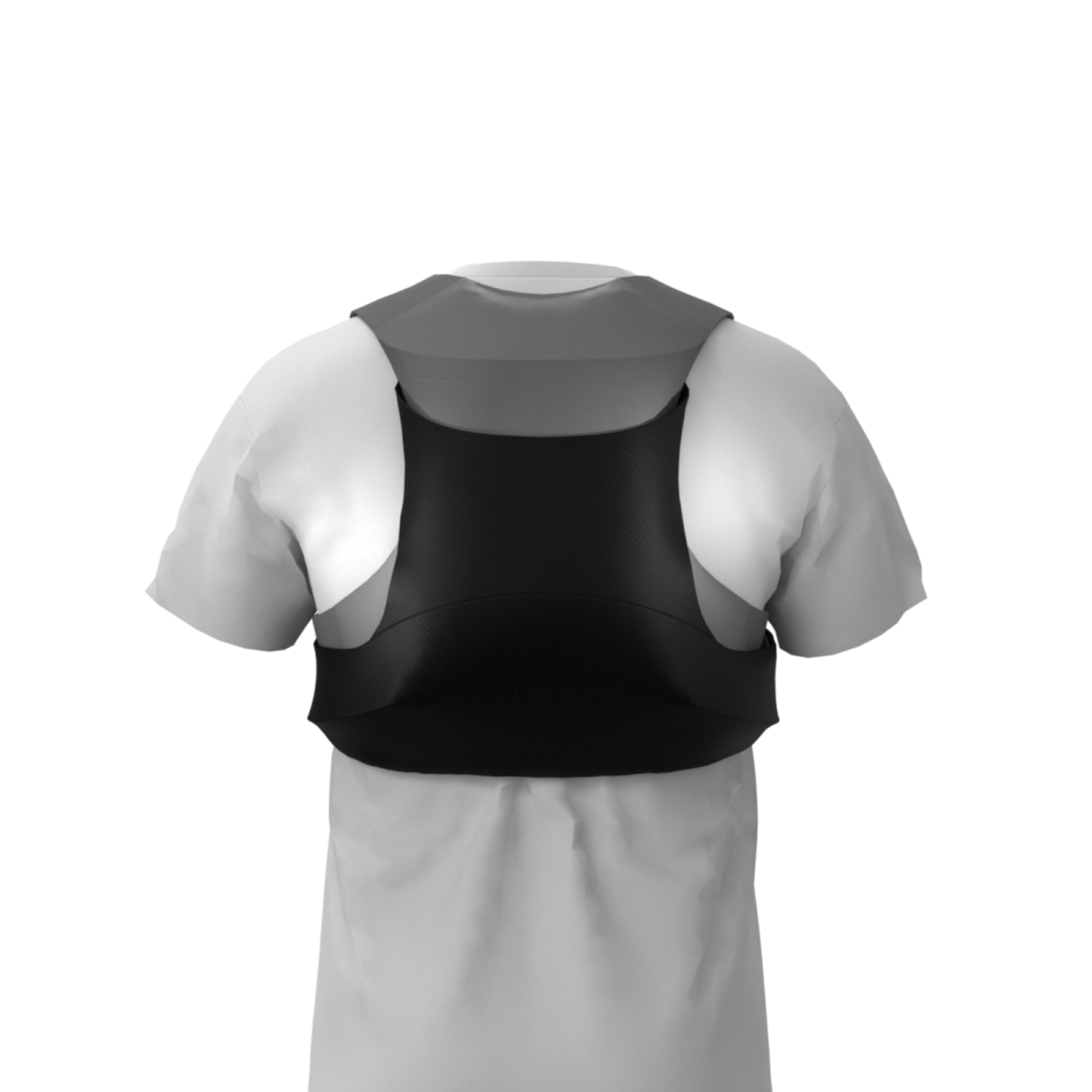
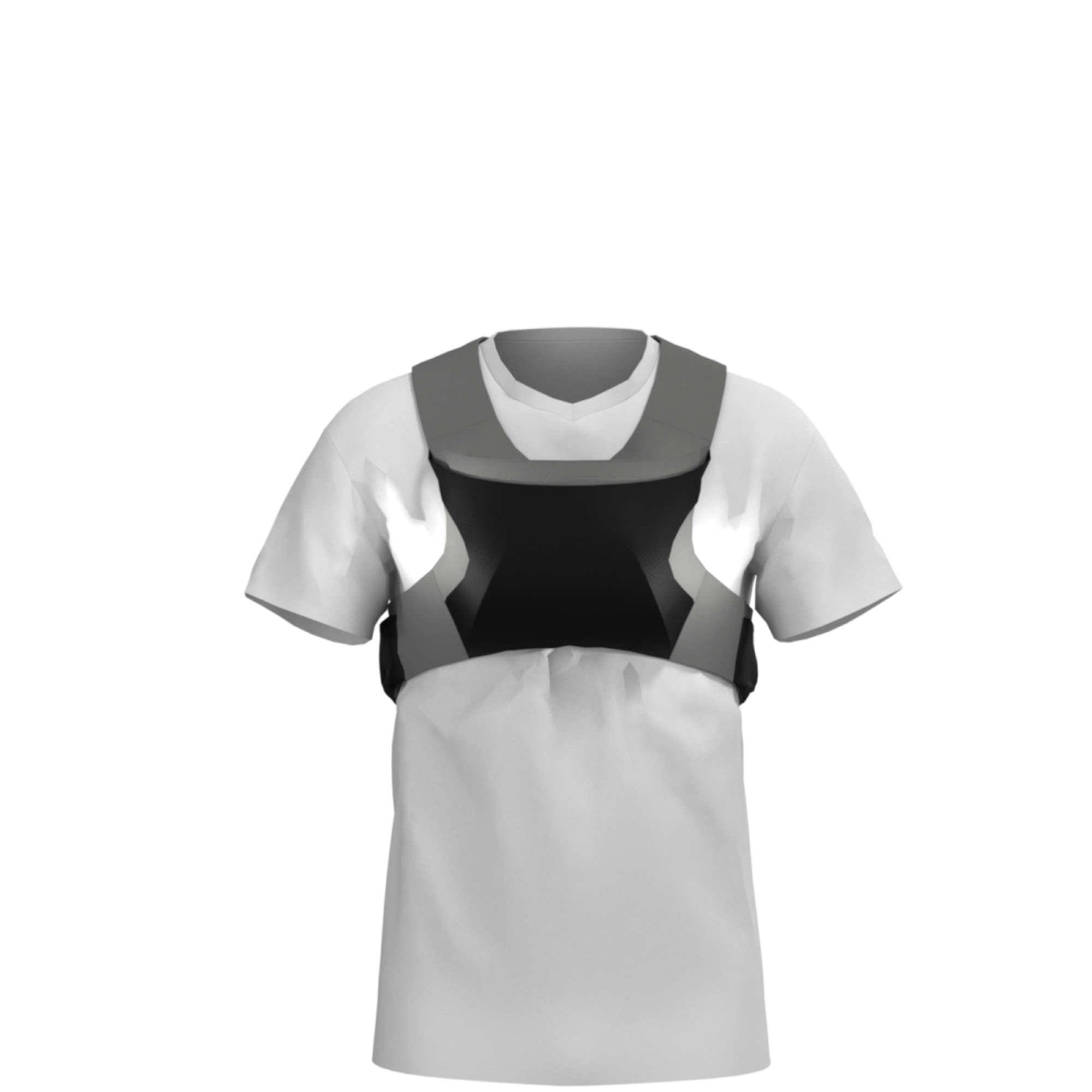
The vest solves this by moving primary storage unapollagetically to the front.
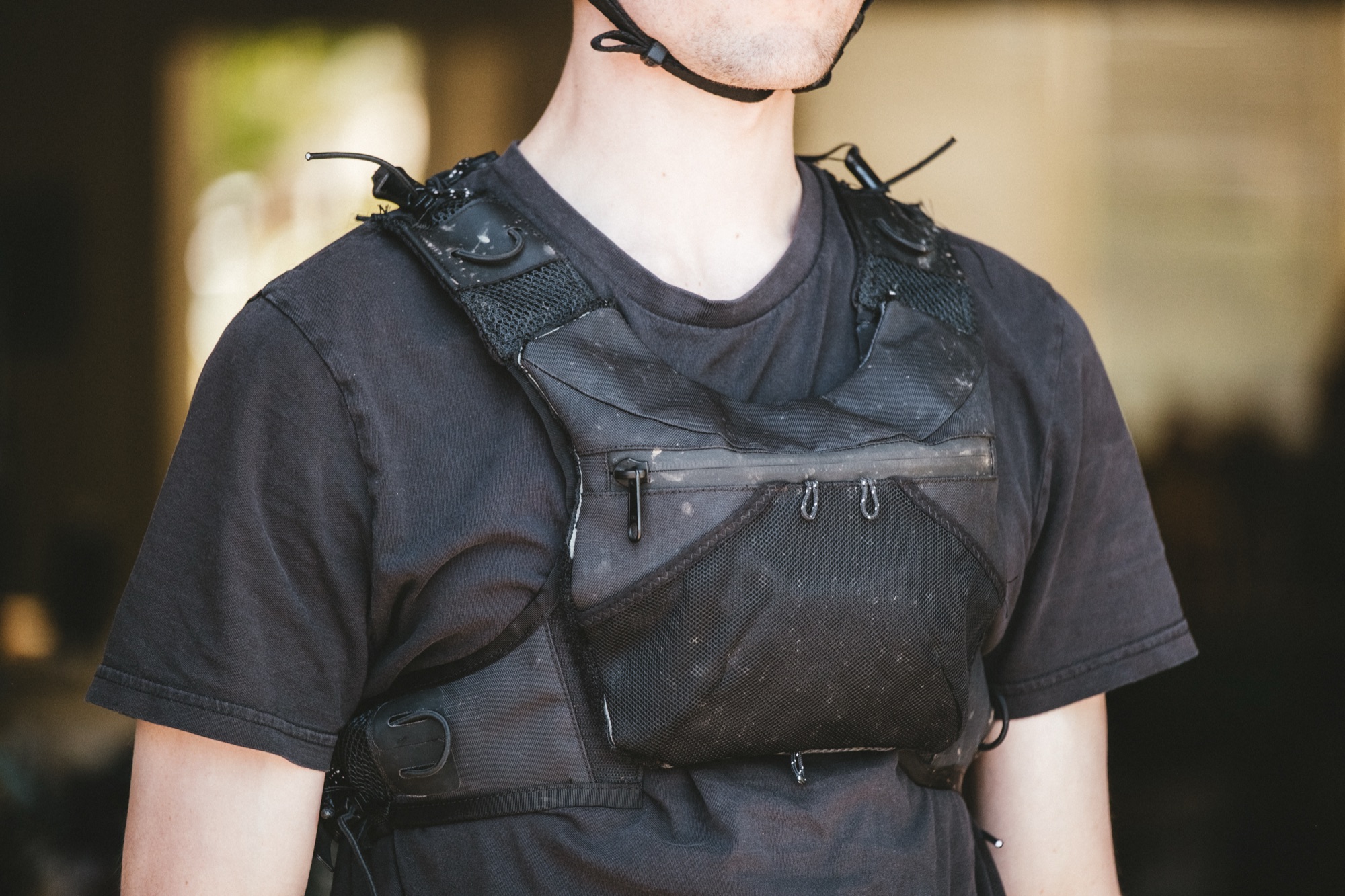
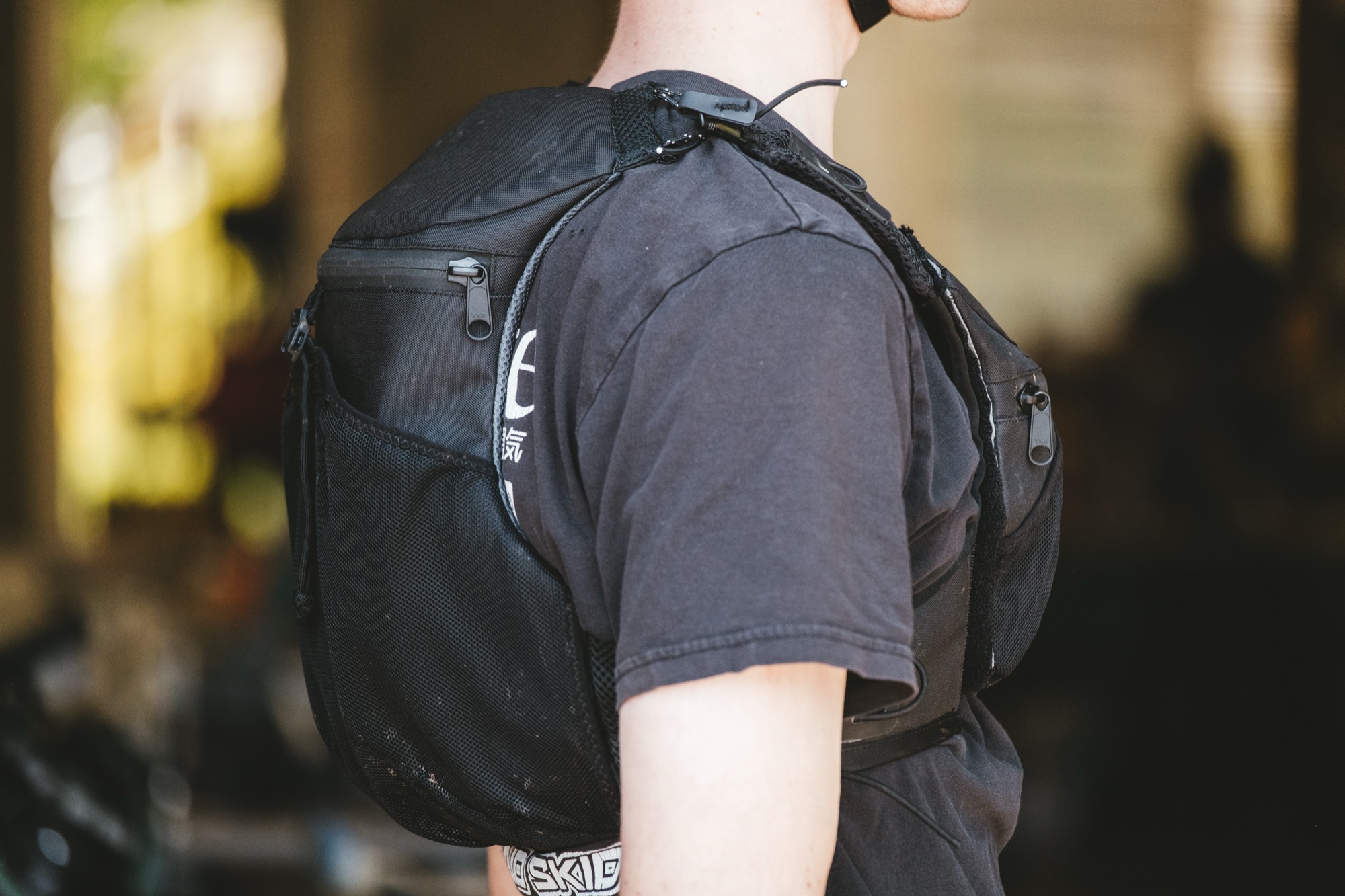
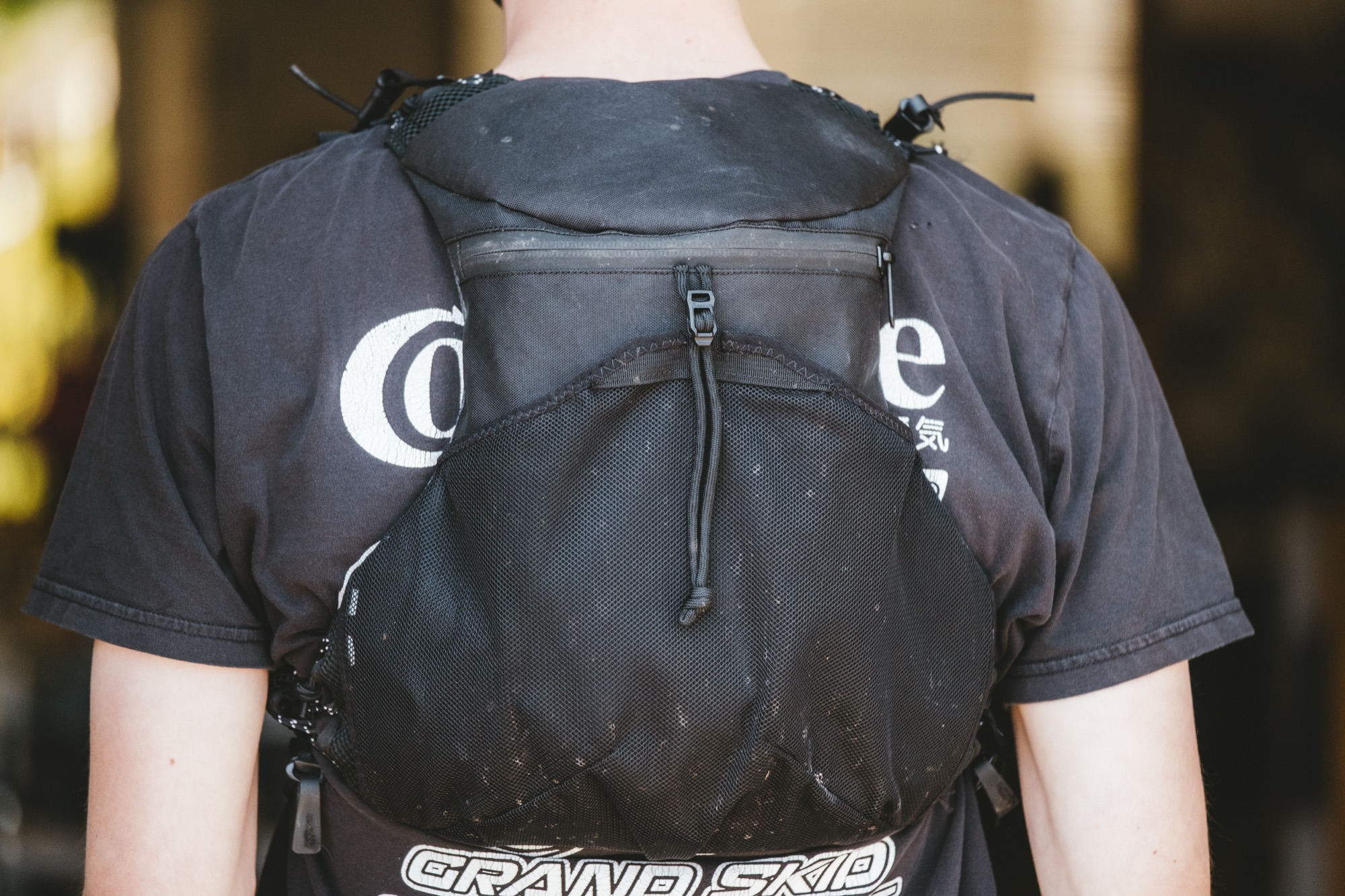
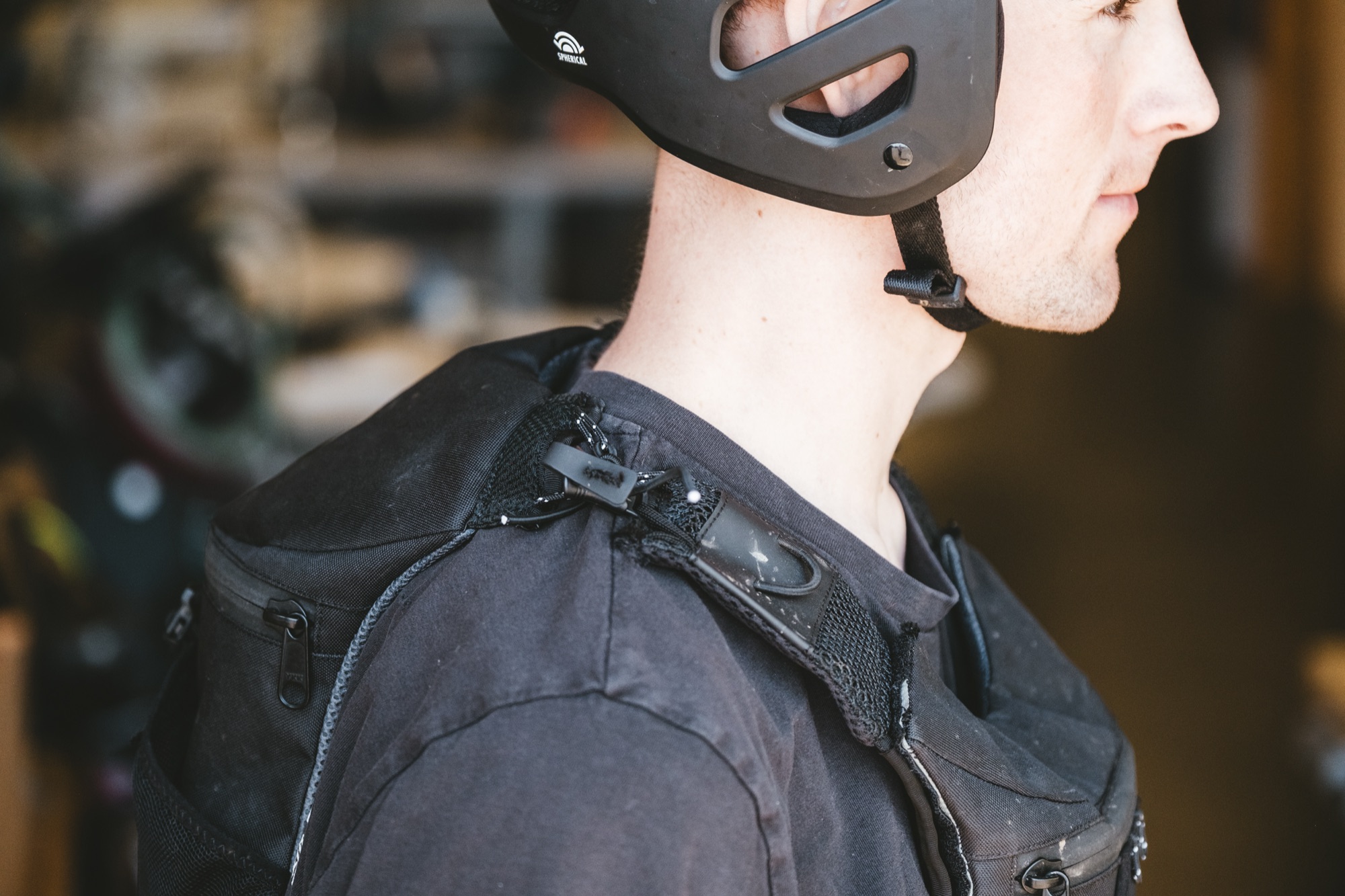
Digital Development
This bag was developed alongside my current digital softgoods development workflow.
3d models of the bags are built in blender or in person and then scanned. Shape iteration is done. then imported into Clo3d for patterning, fit, and construction development. Construction iteration is done intermediate sample approval. Inital bom and costing is done in Excel based on clo output. Patterns are exported to illustrator for marker creation. Files are then formatted for the laser by a python script. Pattern pieces and trim are organized in Excel Bom. Patterns are cut on the laser and narrow goods on narrow goods cutter. Sample is sewn. Final Sample iteration is done. construction documentation is created and costing is finalized. for refinement and finalization, then sent back to Clo for final pattern layout and grading.
Tools
- CLO 3D
- Illustrator
- Sewing Machine
- Laser Cutter
Materials
- [Shell fabric]
- [Liner fabric]
- [Hardware]
Status
- First prototype complete
- Second iteration planned

Iteration
Four prototypes in. The first was rectangular — bad shape, bad fit, poorly placed side straps that bounced. The second improved shape and fit, patterned in Seamly. The third moved to CLO, refining fit and shape further with better straps, though the construction was overly complex. The fourth simplified significantly: best fit to date, integrated closure, better straps.
A fifth prototype is in progress — continuing to refine shape, simplify construction, and improve the closure system. The vest works well for trail and enduro riding and has potential for gravel. The core concept is proven; the work now is refinement.